
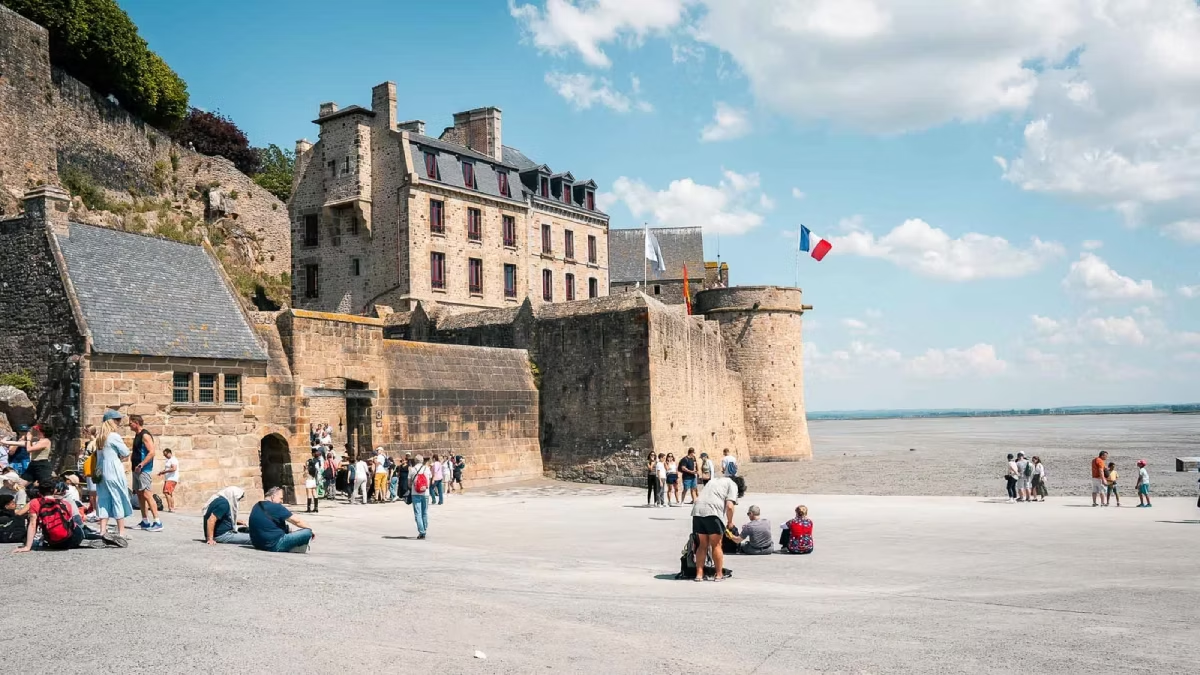
Walking the Ramparts of Mont-Saint-Michel
What to See, How Long It Takes & Practical Tips

The ramparts of Mont-Saint-Michel are the fortified walls and seven towers that ring the lower perimeter of the island. Walking the rampart circuit is free, takes 30–45 minutes at a leisurely pace, and offers the best panoramic views of the bay available anywhere on the island. Access is from the King’s Gate (turn right after entering) or from the abbey level (descend to the ramparts after visiting). The south and east sections are the most dramatic. The ramparts are significantly less crowded than the Grande Rue and are one of the most underrated experiences at Mont-Saint-Michel.
Every visitor to Mont-Saint-Michel walks up the Grande Rue to the abbey. Far fewer walk the ramparts — the elevated stone walkway that runs around the island’s perimeter below the village. This is a shame, because the ramparts offer something the Grande Rue does not: space, silence, and unobstructed views of the bay in every direction.
History of the Ramparts
The fortifications of Mont-Saint-Michel were built primarily during the 14th and 15th centuries, in response to the sustained English threat during the Hundred Years’ War. The English laid siege to the island for approximately 30 years — and never took it. The ramparts, combined with the tides, made the island effectively impregnable.
Seven towers punctuate the circuit, each serving a different defensive function: flanking towers to cover the walls between them, a tower covering the western approach from the sea, a tower guarding the main gate, and round towers at the exposed eastern and northern points. Most date from the 13th to 16th centuries, reflecting successive phases of fortification as the English threat evolved.
The ramparts protected not just the abbey but the entire civilian village within the walls — the population of monks, merchants, and service workers who made the island function as both a religious centre and a commercial hub on a major pilgrimage route.
The Seven Towers
Tour Boucle (Buckle Tower): On the south side, one of the earliest towers on the circuit. Guards the approach from the mainland direction.
Tour du Roi (King’s Tower): Part of the King’s Gate complex at the main entrance — the most formidable defensive structure on the island, with a drawbridge and portcullis. The Tour de l’Arcade stands alongside it.
Tour de la Liberté (Liberty Tower): On the west side, marking the start of the exposed western approach. The beginning point for navigating the rampart circuit westward.
Tour Gabriel (Gabriel Tower): The largest and most impressive tower on the circuit, built in the 16th century to defend the western flank against improved artillery. Listed as a historic monument since 1908. The tower housed a windmill for many years — the millstone is still visible. The Gabriel Tower also served as a gunpowder store, explaining its exceptionally thick walls. It stands on the exposed western promontory with views in three directions across the bay.
Tour Basse (Low Tower) and Tour Cholet: On the north side, guarding the steep and wild northern face of the rock where natural defences were strongest.
Tour du Nord (North Tower): Dating from the 13th century, positioned at the northernmost point of the island. From this tower, the tidal bore is visible arriving from the north during spring tides — the wave front rushing up the bay channels towards the island. One of the best positions on the island for watching the tide come in.
How to Access the Ramparts
From the King’s Gate: After passing through the three entrance gates into the village, turn right immediately before or at the drawbridge passage. A path leads up to the rampart walkway. This takes you onto the south and east sections — the most visually rewarding.
From the abbey level: After visiting the abbey, descend via the Châtelet staircase to reach the rampart level. From here you can traverse the circuit back towards the village entrance. This is the recommended sequence: abbey first on the way up, ramparts on the way down.
From within the village: Several stairways branch off the Grande Rue and connect to the rampart path. Look for stone steps leading east or west off the main street — they are not always well-signposted but are accessible.
The Circuit: What to See and Where
The recommended route is to begin at the King’s Gate, take the ramparts clockwise (turning right), traverse the south and east sections (most open, best views of the bay), pass through or around the Gabriel Tower on the west, continue along the north face, and descend back to the village. The full circuit is approximately 900 metres.
South and east ramparts: The most remarkable section. The walls face the open bay on the south and southwest — on spring tide days, the water surrounds the base of the walls here and the island is completely isolated. The views stretch across the bay to the distant Brittany coast and south towards the Normandy hills. This is the best position for watching the incoming tide advance across the flat bay below.
West ramparts and Gabriel Tower: The western approach was historically the most exposed to attack from the sea. The Gabriel Tower dominates this section — its platform offers a 270-degree view across the bay, the footbridge, and back towards the mainland hotel strip. The tower interior is accessible and worth climbing.
North ramparts: Quieter, steeper, and wilder than the south. The north face of the rock drops directly to the sea — no village here, just the raw granite and the bay. From the North Tower, the view is towards the open Channel and the Normandy coast. The tidal bore arrives from this direction, visible as a rushing line of white water on high-coefficient tide days.
The chemin de ronde (guard’s walk): The walkway on top of the ramparts — the path the medieval garrison walked on patrol. Crenellations on the outer side; the village rooftops on the inner side. A perspective on the island’s medieval architecture that is simply not available from the street below.
Timing and Crowds
The ramparts are consistently less crowded than the Grande Rue. During peak summer hours, when the main street is a slow-moving mass of visitors, the rampart walk can feel almost private. This is partly because the access points are not prominently signed and partly because the crowd’s gravity pulls everyone uphill towards the abbey.
The best time for the rampart walk is late afternoon or evening. From around 5pm, the light falls at a low angle across the bay, turning the tidal flats gold. In summer, the long northern evening light makes the 6–8pm window exceptional for both views and photography. After the day-trippers leave, the ramparts can feel entirely solitary.
Practical Tips
Wear suitable shoes: The rampart walkway includes stone steps, uneven surfaces, and sections without handrails. Flat, grip-soled shoes are essential. Sandals or heels are genuinely unsuitable.
The recommended sequence for a full visit: Arrive at abbey opening, go straight to the abbey (skip the Grande Rue on the way up), visit the abbey, descend via the Châtelet to the ramparts, walk the circuit, descend to the village, explore the Grande Rue and church on the way back down. This sequence avoids fighting the crowds on the way up and gives you the ramparts in the afternoon light.
Photography: The south ramparts at sunset or in the golden hour before it are among the finest photography positions at Mont-Saint-Michel. A wide-angle lens captures the rampart walls curving away with the bay behind. A telephoto from the North Tower captures the tidal bore advancing across the bay. See our photography guide for full details.
Accessibility: The rampart circuit includes steps and uneven surfaces. Sections of it are manageable for visitors with limited mobility who can handle stairs with care. The full circuit is not accessible by wheelchair.
Frequently Asked Questions
Is the rampart walk free?
Yes — the ramparts are free to walk and open during the village’s access hours (effectively 24 hours, though after midnight the island is very quiet).
How long does the rampart walk take?
30–45 minutes for the full circuit at a leisurely pace. 20 minutes for the south and east sections only (the most scenic).
What are the best viewpoints on the ramparts?
The south and east sections for open bay views; the Gabriel Tower for the widest panoramic view; the North Tower for watching the incoming tide and tidal bore.
Can I access the towers?
The Gabriel Tower is accessible and worth climbing. Other towers vary — some are open, some are locked or under conservation work. Check on arrival.
Are the ramparts suitable for children?
Yes — children generally love the towers, crenellations, and elevated perspectives. Some sections have drops and no handrails; keep young children close on exposed sections.
