
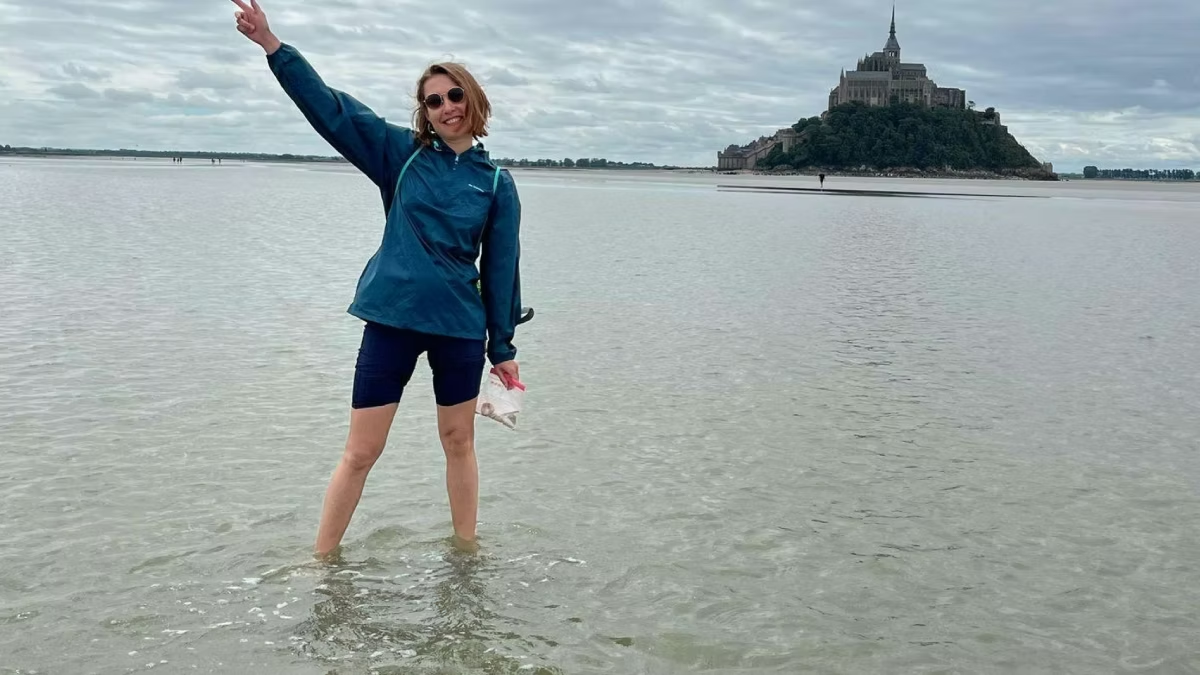
Bay Walk & Guided Bay Crossing at Mont-Saint-Michel
Routes, Guided Crossings & What to Expect

Guided walks across the tidal flats of Mont-Saint-Michel Bay are available year-round, led by 67 officially authorised guides. Routes range from a 2km introductory bay walk (1.5–2 hours, starting from the island) to the full 13km crossing from Genêts or Grouin du Sud on the mainland to the mount (5–6 hours). Go barefoot or in flip-flops. Expect to wade rivers up to thigh-deep. The quicksand is real and genuinely dangerous — never attempt this without a certified guide. Book in advance through the Tourist Information Centre (ot-montsaintmichel.com) or directly with operators including Chemins de la Baie. Prices typically start from €9–€10 for the short walk; longer crossings from approximately €25–€35.
Crossing the bay of Mont-Saint-Michel on foot is the experience that separates visitors who have been to Mont-Saint-Michel from those who have truly experienced it. Medieval pilgrims made this crossing for over a thousand years — on foot, barefoot, through quicksand and tidal channels, with the abbey growing larger ahead of them. A certified guide makes the same crossing safe and extraordinary.
Why the Bay Walk Is Unlike Anything Else Here
From the footbridge or the ramparts, the bay is a view. On foot, crossing it, the bay becomes a physical reality. The scale — vast, flat, constantly changing — cannot be conveyed in a photograph. The silence, broken only by wind and the distant sound of water, is total. The feeling of walking across what was seabed hours ago, with the island ahead rising from the flat sand, is one of the great experiences of Normandy.
The bay has the highest tidal range in continental Europe — up to 15 metres between high and low tide. At low tide, tens of thousands of hectares of sand, mud, and tidal channels are exposed. These same flats, crossed by rivers that shift their courses constantly, are laced with quicksand that can swallow a person to the waist. The guides know where the quicksand zones are, where the rivers are crossable, and when the tide will begin to return. Without them, crossing the bay is genuinely dangerous.
The Route Options
Short Bay Walk (2km, 1.5–2 hours)
Starting point: from the Mont-Saint-Michel village entrance, heading out across the bay and back. This introductory route covers the essentials — the sensation of walking on the bay floor, a quicksand demonstration, the tidal bore if conditions allow, and views of the mount from the sands. Accessible to most ages and fitness levels. Particularly good for families with children from age 3 upwards.
This is the walk that starts and ends at the island — no transport logistics, no long commitment. If you only have time for one bay experience, this is the one.
Tombelaine Crossing (3–3.5 hours, approximately 5km)
Starting from Mont-Saint-Michel, this route heads north across the bay to Tombelaine — the uninhabited island approximately 5km away, visible from the ramparts. Tombelaine was a fortified English position during the Hundred Years’ War siege and is now a protected bird sanctuary. The view of Mont-Saint-Michel from Tombelaine — from the north, across open water — is unavailable from any other point accessible to visitors. The route returns to the island. A more physically demanding version of the short walk.
Traditional Crossing — One Way (6–7km, 3–4 hours)
Starting from the mainland at Bec d’Andaine (near Genêts) or Grouin du Sud (in Vains/Saint-Léonard), this route follows the historical pilgrimage path across the bay to Mont-Saint-Michel. The distance is approximately 6–7km. Some guides offer a one-way option — you walk to the island and return by bus. This is excellent for families with children who can manage 7km but not 14km.
Arriving at the island from the north, across the bay on foot, is one of the most emotionally powerful moments the site offers. The mount approaches gradually over 2–3 hours of walking. The final arrival through the tidal channels and up to the walls from a direction no day-tripper ever approaches is something genuinely different.
Full Return Crossing (13km, 5–6 hours)
The complete pilgrimage experience — departing from the mainland and returning to the mainland, with time on the island between. 13km round trip on tidal flats, crossing rivers, passing through quicksand zones with the guide, and having approximately 45 minutes to an hour on the island itself. For fit adults and older children. Not suitable for young children or those with significant physical limitations.
The longest excursion offered by Chemins de la Baie and similar operators runs to approximately 6h15 and covers around 16km. This is the full immersive bay experience.
The Quicksand
The quicksand in the bay of Mont-Saint-Michel is not a myth embellished for tourist appeal. It is a genuine geophysical phenomenon created by fine silt (known as tangue) saturated with water. Step onto a quicksand zone without a guide and you can sink to knee or waist depth before you can extract yourself. In the middle of the bay, with no landmarks and an incoming tide, this is life-threatening.
On guided walks, the guide demonstrates the quicksand — typically stepping into a zone and showing how to extract yourself. The technique involves lying back to distribute your weight and rolling out. The experience is memorable and, in the right hands, safely educational. Most visitors describe it as one of the highlights of the walk.
The Tidal Bore
During spring tide crossings (coefficient above 90–100), the tidal bore — the wave front of the incoming tide — is visible advancing across the bay. The bore at Mont-Saint-Michel is not a dramatic wall of water like the Severn Bore, but a rushing, hissing wave front that moves at the speed of a galloping horse across the flat bay. From the bay floor, at guide-level, it is audible before it is visible — a deep, rushing sound. The certified guides time crossings to allow observation of the bore from a safe position. The short bay walk from the island is specifically designed to include the bore on appropriate tidal coefficient days.
How to Book
Through the Tourist Information Centre: The official Tourist Office of Mont-Saint-Michel (ot-montsaintmichel.com) maintains a list of all 67 authorised guides and can advise on current availability and book on your behalf.
Chemins de la Baie: One of the largest and most established operators of guided bay walks, with departures from both the mainland and the island. Offers the full range of routes from the short walk to the full crossing. Their website (cheminsdelabaie.com) has English-language booking. Prices: adults approximately €9 for the short Promenade en Baie; longer crossings from around €25–€35.
Les Traversées de Ludo: Another well-reviewed operator with narrated crossings focused on the bay’s natural and cultural heritage — wildlife, ornithology, tidal phenomena, pilgrimage history, and geology. Full-day and half-day options, including sunset and spring tide specialist departures.
Through online booking platforms: Bay walks are bookable via online platforms with English-language confirmation. Guide Stéphane Guéno is among the most reviewed English-friendly guides for shorter bay walks.
Timing around tides: All bay walks depend on the tides and departure times shift daily. Book in advance to secure your preferred date, then confirm timing with the operator as your visit approaches — the guide will confirm the exact departure time based on that day’s tide tables.
What to Wear and Bring
Footwear: Go barefoot or wear flip-flops that can be removed and carried easily. You will wade rivers. Waterproof hiking boots are not appropriate — they fill with water and become dangerous weights. Most guides recommend barefoot for the best experience.
Clothing: Shorts or quick-dry trousers. A windproof upper layer regardless of the season — the bay is always exposed. A waterproof jacket in anything other than settled summer weather.
In summer: Sun protection (hat, sunscreen) — there is no shade on the bay floor. Water bottle. The walk is more physically demanding than it looks.
In winter: Neoprene socks or water shoes rather than bare feet — the water is cold. Well-insulated upper layer. Winter crossings are quieter, more atmospheric, and rarely crowded.
What not to bring: Large bags or luggage. Anything you cannot carry comfortably for 2–6 hours. Leave your main luggage in the car or hotel.
Age and Fitness
The short bay walk (2km) is accessible from age 3 with a parent. Children under 3 can join if carried. Guides can advise on family-appropriate routes.
The full crossing (13km) requires reasonable physical fitness and the ability to wade rivers, walk on uneven sand and silt for several hours, and tolerate variable weather. There is no upper age limit, but realistic self-assessment is important.
The bay walk is not suitable for wheelchairs, but some guides can arrange reduced-mobility versions on the flatter sections near the island for visitors with limited mobility — contact the Tourist Information Centre for adapted options.
Frequently Asked Questions
Is a guide legally required for bay walks?
Yes — crossing the bay without an authorised guide is illegal and extremely dangerous. There are 67 officially authorised guides; all others operating without authorisation are illegal. Never attempt to cross the bay independently.
How far in advance should I book?
For summer peak season (July–August) and spring tide weekends, book 2–4 weeks ahead. Shoulder season (May, June, September) allows shorter notice. Winter crossings can often be booked a few days in advance.
Can I swim in the bay?
No — swimming in the bay is prohibited due to the quicksand, the speed of the incoming tide, and the tidal channels. The bay is safe to cross on foot with a guide and dangerous in almost every other context.
Is the walk physically demanding?
The short walk (2km) is accessible for most fitness levels. Longer crossings involve 3–6 hours of walking on uneven surfaces, river wading, and exposure to wind. Assess your fitness honestly and choose the route accordingly.
What happens if the tide comes in during the walk?
The certified guides plan every walk around the tidal tables and always maintain a wide safety margin. No authorised guide will put a group at risk from the tide. The bore, when visible, is watched from a safe position the guide has chosen in advance.
