
How to Watch the Tidal Bore at Mont-Saint-Michel
Best Spots & Timing to Watch the Incoming Tide

The tidal bore at Mont-Saint-Michel is a visible wave front that forms during spring tides as the incoming sea collides with the outgoing current of the bay’s rivers. It is most impressive during tides with a coefficient above 100 and occurs approximately 30–60 minutes before high tide. The best viewing spots are the footbridge connecting the island to the mainland, and the Pointe du Grouin du Sud on the bay’s southern shore. Arrive at least two hours before high tide. Never attempt to cross the bay alone to watch the bore.
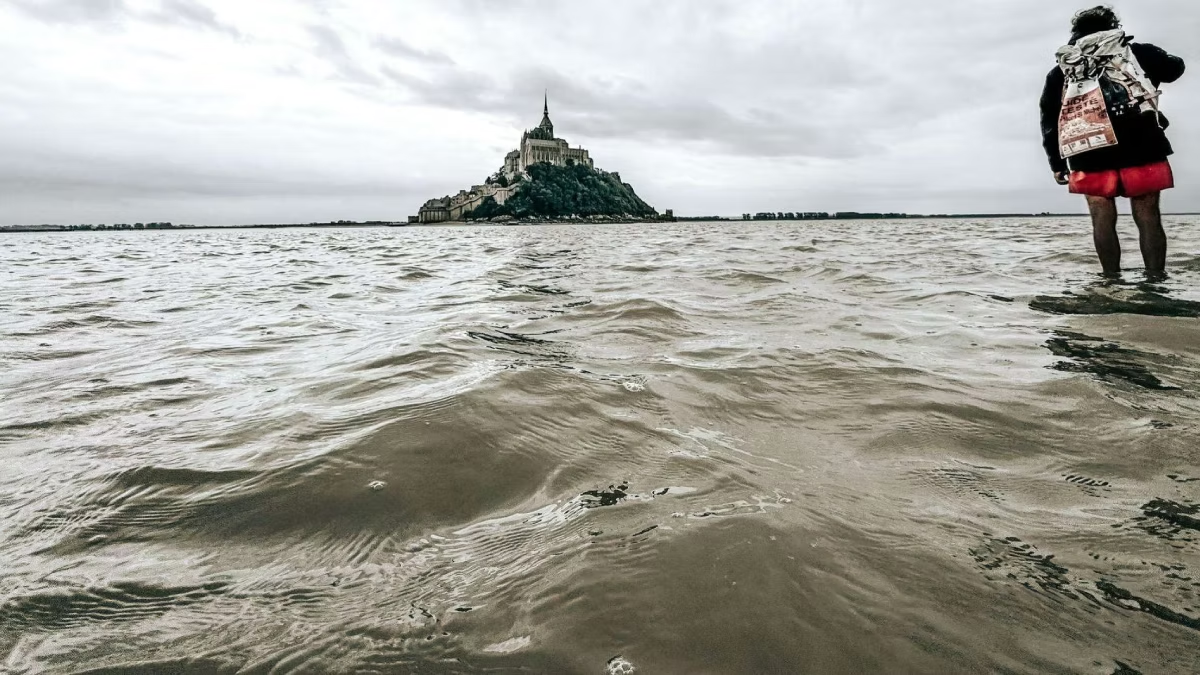
Victor Hugo described the tide at Mont-Saint-Michel as rising “at the speed of a galloping horse”. The tidal bore is the most vivid expression of this — a roaring wall of water advancing across the flat bay, audible before it is visible, riding over the river currents with a rushing sound that carries across the sand. On the highest tide days, experienced kayakers ride it. For everyone else, finding the right spot and arriving early enough is the secret to witnessing it properly.
What Is the Tidal Bore?
The tidal bore — known in French as the mascaret — forms during strong spring tides when the incoming Atlantic sea floods across the bay of Mont-Saint-Michel. As the sea advances, it meets the outgoing current of the bay’s three rivers: the Couesnon, the Sélune, and the Sée. The collision of incoming saltwater against outgoing freshwater creates a visible, audible wave front — the bore — that sweeps up the river mouths and across the bay floor.
The bore at Mont-Saint-Michel ranges from a subtle ripple on moderate spring tides to a wave of tens of centimetres on the largest tides. It is most pronounced during equinox spring tides — the highest tides of March and September — when coefficients exceed 110 and the water advances most powerfully.
Unlike some of the world’s more famous tidal bores (notably in the Bay of Fundy in Canada), the Mont-Saint-Michel bore is not a towering wave. It is a broad, rolling front of water that announces itself through sound before sight — a deep rushing, roaring noise that builds across the bay minutes before the wave itself arrives. This combination of sound and movement is what makes it so compelling to witness.
When Does the Tidal Bore Occur?
The bore is only visible during strong spring tides — those with a coefficient above approximately 90. On lower tide days, the water advances more gradually and there is no distinct bore to observe.
It occurs approximately 30–60 minutes before peak high tide, as the incoming water accelerates during the final phase of its advance. The timing depends on the specific layout of the bay, the tide coefficient, and prevailing wind conditions. As a general rule, position yourself at your chosen viewpoint at least two hours before high tide to allow time to observe the gradual advance of the water before the bore arrives.
Key dates when the bore is most visible in 2026:
| Date | Coefficient | Approx. High Tide | Bore Timing |
|---|---|---|---|
| 14 March | 119 | ~14:47 | ~13:45–14:15 |
| 29 March | 115 | ~15:32 | ~14:30–15:00 |
| 13 September | 118 | ~15:15 | ~14:15–14:45 |
| 12 October | 112 | ~13:38 | ~12:40–13:10 |
| 14 August | ~110 | ~21:28 | ~20:30–21:00 |
These are approximate timings only — always confirm against the official SHOM tide tables for Saint-Malo and add 5 minutes for Mont-Saint-Michel. See the full 2026 tide calendar for all spring tide dates.
The Best Spots to Watch the Tidal Bore
On the Island
The footbridge is the single best spot for witnessing the bore up close. The bridge spans the mouth of the Couesnon river — precisely where the bore forms as the incoming sea meets the river current. Standing on the footbridge during a strong spring tide, you can watch the water rush in beneath and around you, and hear the bore’s distinctive roar as it approaches from the west. On days with a coefficient above 110, the lower part of the bridge may be submerged at the peak of the tide — stand on the upper section and observe the water rising around the bridge structure itself.
The abbey’s west terrace is the premier elevated viewpoint for watching the full sweep of the bay during the incoming tide. Access is included with your abbey ticket. From the west terrace, you can see the entire bay and watch the water advance across the distant flats. The bore itself may not be as visible here as from the footbridge — you are higher and further from the river mouths — but the panoramic scale of the incoming tide is extraordinary. Plan to be inside the abbey at least one hour before high tide to have a position on the terrace before the crowds.
The southern ramparts offer an elevated view along the island’s perimeter, with the bay visible on three sides. Walking the ramparts during the incoming tide is one of the most memorable experiences at Mont-Saint-Michel — the water advances below you as you walk above it. The section facing west and south is best for watching the tide approach.
On the Mainland
Pointe du Grouin du Sud, Vains-Saint-Léonard: one of the best mainland viewpoints for the bore. This promontory on the bay’s southern shore sits at the mouth of the Sée river, where the bore is most pronounced. Experienced surfers and kayakers ride the mascaret here on the highest tides. The view across the bay with Mont-Saint-Michel in the background is also exceptional for photography.
Roche Torin, Courtils: a viewpoint on the eastern shore of the bay offering a clear view of Mont-Saint-Michel across the water. During spring tides, the changing bay from low to high tide can be watched here from a safe mainland position, with the mount gradually surrounded by water as the tide advances.
The Gué de l’Épine, Val-Saint-Père: another bay viewpoint on the southern shore, facing the mount. Good for wide-angle photography of the island during high tide.
The Pontaubault bridge: the bridge at Pontaubault offers a view down the Sélune river towards the bay. During very high tides, the bore can be seen coming up the river from this vantage point. Less dramatic than the Grouin du Sud, but accessible and uncrowded.
The Jardin des Plantes belvedere, Avranches: for a high, wide panoramic view of the entire bay and mont, the public gardens in Avranches (approximately 20 minutes by car from the mount) offer an elevated overview. This is the best spot to watch the full transformation of the bay from a landscape perspective.
How to Plan Your Tidal Bore Visit
Step 1: Check the coefficient: Find a spring tide date with a coefficient above 100 — preferably 110 or higher for the most dramatic bore. Use our 2026 tide calendar or the official SHOM tables.
Step 2: Note the high tide time: This is your anchor. Work backwards from it to plan your day.
Step 3: Arrive 2 hours before high tide: This is the official recommendation from Normandy Tourism and the Mont-Saint-Michel tourist office. Arriving at this point gives you time to reach your viewpoint, watch the gradual advance of the water across the flats, and be in position when the bore arrives 30–60 minutes before the peak.
Step 4: Choose your viewpoint: If you want to be on the island, position yourself on the footbridge or the abbey’s west terrace (the latter requires an abbey ticket). If you prefer the mainland, head to Grouin du Sud or Roche Torin.
Step 5: Plan your departure: On very high tide days (coefficient above 110), the causeway is submerged for approximately 1.5 hours around high tide. If you are on the island, you will need to wait for the tide to recede before you can leave. Factor this into your day.
Safety
Never cross the bay alone to watch the bore: The tidal flats look deceptively flat and safe at low tide, but contain genuine quicksand and the incoming tide moves faster than most people expect. The bore’s arrival can accelerate rapidly during its final approach. Every year, multiple visitors are rescued by the fire brigade after ignoring this warning. Guided bay crossings are available year-round and are the only safe way to experience the bay floor. See our bay walk guide.
Watch from designated viewing areas: The footbridge, ramparts, and mainland viewpoints listed above are all safe observation points. Do not attempt to stand on the tidal flats to watch the bore.
Be aware of the bore’s speed: It arrives quickly and moves at approximately 6 km/h. On the highest tide days, it can be faster. If you are standing on the lower footbridge section, be prepared for water to approach unexpectedly quickly during the bore’s arrival.
Frequently Asked Questions
What is the tidal bore at Mont-Saint-Michel?
The tidal bore (mascaret) is a visible wave front that forms during strong spring tides as the incoming sea meets the outgoing current of the bay’s rivers. It sweeps up the river mouths with a rushing, roaring sound approximately 30–60 minutes before peak high tide.
When can I see the tidal bore at Mont-Saint-Michel?
The bore is visible during spring tides with a coefficient above approximately 90. It is most dramatic during equinox tides in March and September. In 2026, the best dates are 14 March (coefficient 119), 13 September (coefficient 118), and 12 October (coefficient 112).
Where is the best place to watch the tidal bore?
The footbridge is the closest on-island viewpoint, directly over the river mouth where the bore forms. The abbey’s west terrace offers a panoramic overview. On the mainland, the Pointe du Grouin du Sud in Vains-Saint-Léonard is the best dedicated viewpoint.
Is the tidal bore dangerous?
From designated viewing points it is safe to watch. Never cross the bay to observe it — the flats are dangerous due to quicksand and the speed of the incoming tide.
How loud is the tidal bore?
On high-coefficient tides, the bore is audible across the bay before it is visible — a deep rushing, roaring sound that builds as it approaches. It is one of the most distinctive sensory experiences at the site.
Can I watch the bore from inside the abbey?
Yes — the abbey’s west terrace offers a clear panoramic view of the incoming tide and the bore. You need an abbey ticket to access the terrace. Plan to be on the terrace at least one hour before high tide for a good position.
