
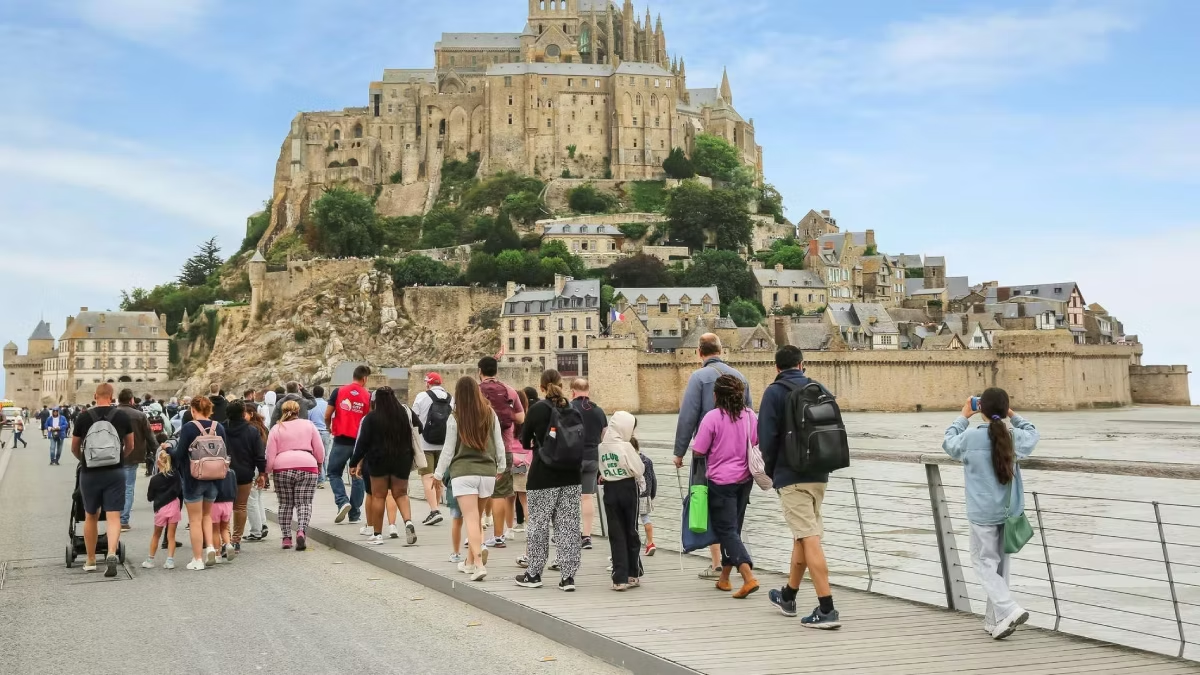
Mont-Saint-Michel Crowds: When to Avoid & When to Go
When to Avoid & When to Go — By Hour, Day & Month

Mont-Saint-Michel receives over 3 million visitors a year — up to 20,000 per day in peak summer. The island’s single main street makes it uniquely vulnerable to congestion. The most effective crowd avoidance strategies are: visit before 10am or after 5pm regardless of season; choose weekdays over weekends; visit in May, September, or October rather than July or August; and book your abbey ticket in advance to skip the 45–90 minute walk-up queue.
The crowd situation at Mont-Saint-Michel is one of the most honest conversations you can have before visiting. The island is extraordinary — but it is also genuinely congested during peak hours. The Grande Rue, the single cobblestoned street from the island gate to the abbey entrance, is narrow enough that a single file of visitors becomes a bottleneck during busy periods. Understanding when this happens — and when it does not — changes the visit entirely.
Visitor Numbers: The Reality
Mont-Saint-Michel recorded approximately 1.6 million abbey visits in 2025, and total destination visitors (including those who visit the island but not the abbey) reach approximately 3 million per year. This makes it the most visited site in France outside Paris.
Daily visitor numbers by season:
| Season | Typical Daily Visitors | Abbey Queue (walk-up) |
|---|---|---|
| Peak summer (Jul–Aug) | 15,000–20,000 | 45–90 minutes |
| Shoulder (May–Jun, Sep–Oct) | 8,000–12,000 | 15–30 minutes |
| Low season (Nov–Apr) | 3,000–5,000 | None or minimal |
| Winter weekday (Dec–Feb) | 1,000–3,000 | None |
These numbers matter because of the island’s physical constraints. The Grande Rue is approximately 3–4 metres wide in places. When 15,000 people attempt to move up and down the same street over the course of a day, the midday hours become genuinely uncomfortable — a slow shuffle rather than a walk.
By Season
July–August: Peak — Plan Around It
This is when visitor numbers are highest and the experience most dependent on timing. The shuttle buses from the car park fill rapidly from mid-morning. The Grande Rue is congested from approximately 10am to 5pm. Abbey queues without advance booking reach 45–90 minutes. Accommodation prices are at their peak.
If you must visit in July–August: Arrive before 9am (the shuttle starts at 7:30am), book your abbey ticket in advance, and be prepared to share the streets. The Nocturnes de l’Abbaye evening light show (19:30 to 23:00) is a genuine summer highlight — arriving for an evening visit in summer is actually one of the best crowd-management strategies, as day-trippers leave while the light show begins.
May–June: Shoulder — Recommended
May is consistently one of the best months. Visitor numbers are roughly half of peak summer, the weather is pleasant, and strong spring tides occur around new and full moons. June is similarly good until the school holidays in late June, when numbers increase.
The one exception in May: the Mont-Saint-Michel Bay Marathon at the end of the month draws approximately 5,000 runners and many spectators — avoid this weekend if you want quieter conditions.
September–October: Excellent — The Other Recommended Window
September is the equal of May in terms of overall conditions. Schools return in early September, reducing family visitor numbers significantly while temperatures remain comfortable. The autumn equinox tides (particularly 13 September 2026, coefficient 118) attract enthusiastic visitors — but the days immediately around the highest tides are worth the slightly larger crowds for the spectacle they offer.
October is quieter still. Some shops and restaurants begin to reduce their hours, but the abbey remains fully open and the October light is exceptional for photography.
November–March: Quiet — For the Independent Traveller
Winter is genuinely quiet. Daily visitor numbers drop to 1,000–5,000 on most days. The abbey’s stone interiors have a contemplative atmosphere entirely different from summer. Free abbey admission on the first Sunday of each month (November through March) draws slightly more visitors on those days, but still nothing approaching summer numbers.
The tradeoff is shorter days (the sun sets before 5pm in December), cooler and windier conditions, and some restaurant and shop closures. The island never feels entirely deserted — there are permanent residents, monks, and some year-round tourism — but it is as close to a private experience as you will get.
By Day of the Week
Weekends are consistently busier than weekdays at every time of year. Saturday is typically the busiest single day; Sunday is also busy. The difference is most pronounced during shoulder season — a May Saturday can feel noticeably more crowded than a May Tuesday.
French school holiday periods amplify this effect significantly. Easter weekend, the Toussaint holiday (late October), and the Christmas-New Year period all see elevated visitor numbers regardless of season.
Best days to visit: Tuesday, Wednesday, or Thursday. These mid-week days are consistently the quietest, particularly in shoulder and low seasons.
By Time of Day
This is the most actionable crowd variable — because unlike season and weekday, you can control time of day regardless of when your overall trip falls.
Before 10am: The consistently quietest window. The island has been accessible since the early morning shuttle (7:30am), but most day-trippers arrive after 10am. The Grande Rue is quiet, the abbey counter has no queue, and the monastery has a genuinely contemplative atmosphere. If you are staying nearby, arriving at the 9am or 9:30am abbey opening is the single most effective crowd strategy available.
10am–5pm: The peak congestion window, particularly in summer. The shuttle queues lengthen, the Grande Rue fills, and the abbey counter queue builds. If you are arriving during these hours, having your abbey ticket pre-booked is essential.
After 5pm: The second quiet window. Coach groups and day-trippers begin leaving from around 4pm. By 6pm the island atmosphere is markedly different. In summer, the extended abbey hours (open until 7pm) allow a late afternoon or early evening visit — and from late July the Nocturnes light show begins at 7:30pm, making an evening stay particularly worthwhile.
After dark: For overnight visitors only. After the last shuttles of the evening, the island belongs to its guests and its handful of permanent residents.
Strategies That Actually Work
1. Book your abbey ticket in advance: Walk-up queues in summer are the single biggest time-waster at Mont-Saint-Michel. An online ticket costs the same as the counter price, is delivered instantly, is non-time-specific, and lets you go straight to the entrance. Buy your abbey ticket here — this is the simplest, highest-impact crowd strategy available.
2. Walk the causeway instead of taking the shuttle: When the shuttle queue is long, the 40–50 minute walk across the causeway is not only faster but significantly more beautiful — the view of the mount approaching across the bay is one of the great walks in Normandy. And it means you arrive having already experienced something the shuttle passengers have not.
3. Leave the Grande Rue: The overwhelming majority of visitors follow the same route: through the King’s Gate, straight up the Grande Rue, into the abbey. The side streets, the quieter lanes off the main route, and the ramparts running parallel to the Grande Rue are consistently less crowded and offer a better sense of the medieval village character.
4. Visit on a high tide day but arrive early: High tide days (coefficient above 100) attract more visitors — people specifically come to watch the water. But if you arrive before the crowds build (before 10am), you can watch the full incoming tide from a quiet rampart before the island fills. Timing your abbey visit for the early morning and your tide watching for later in the day works well on days when the tide peaks in the afternoon.
5. Stay overnight: The definitive crowd-avoidance strategy. After approximately 17:00–18:00, the coaches leave and the island settles. By 20:00 in summer, the atmosphere is transformed. See our island vs nearby guide for the options.
Specific Dates to Avoid in 2026
- Bay Marathon weekend (late May 2026): ~5,000 runners plus spectators
- Bastille Day weekend (13–14 July): Peak July traffic
- August bank holiday weekend (15 August): The highest single-day visitor numbers of the year, combined with the 14 August evening high tide
- French school holiday periods (check official calendar): Mid-February, Easter (late April), late June–early July transition, Toussaint (late October)
- Very high tide days without early arrival: Coefficient 110+ days attract tide-watchers — worth visiting, but arrive early
Frequently Asked Questions
How crowded is Mont-Saint-Michel?
In peak summer (July–August), up to 20,000 visitors per day on an island with one main street 3–4 metres wide. In winter, fewer than 5,000 on most days. Arriving before 10am or after 5pm dramatically reduces the impact regardless of season.
What is the least crowded time to visit Mont-Saint-Michel?
Winter weekday mornings, particularly January and February. November and March are also very quiet. Of the busier seasons, May and September weekday mornings offer the best crowd-to-experience ratio.
Is Mont-Saint-Michel worth visiting despite the crowds?
Yes — but timing matters significantly. Visitors who arrive at peak midday in August often describe the experience as overwhelming. The same visitors arriving at 8:30am or 6pm describe it as magical. The site itself is extraordinary; managing the crowds is simply a matter of planning.
Do I need to book the abbey in advance to avoid queues?
Yes, strongly recommended from April to September. Walk-up queues reach 45–90 minutes in summer. Booking online takes two minutes and costs the same as the counter price. See our abbey entry ticket guide.
Are weekends significantly more crowded than weekdays?
Yes — particularly in shoulder season. A May or September weekday is noticeably quieter than the same month on a Saturday. If your dates are flexible, mid-week visits are consistently better.
